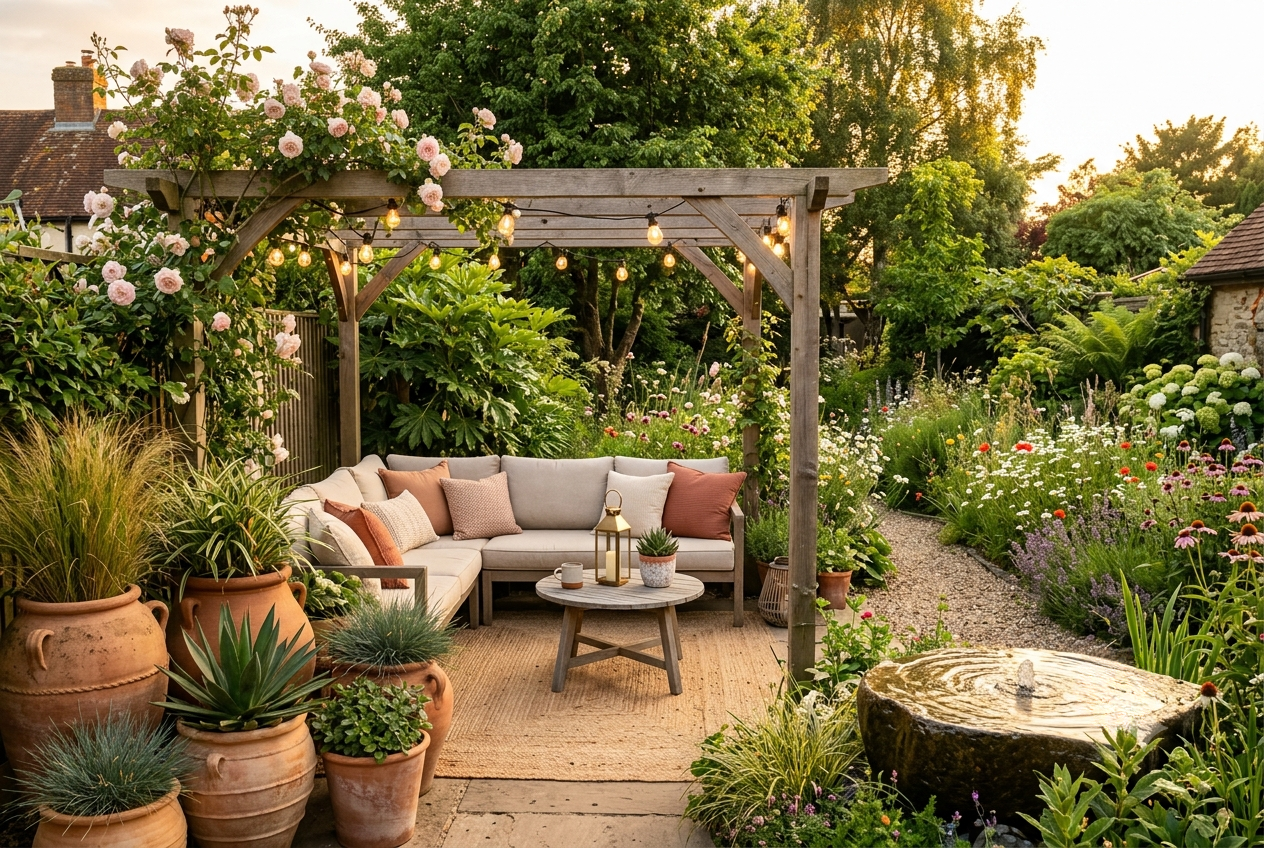
Discover 20 garden decor ideas for 2026 that transform any outdoor space. Real trends, real tips, real results for every garden size and budget.
Your garden is the most underdecorated space in your home. Not because you haven’t tried — but because most garden decor advice either costs a fortune, requires a professional landscaper, or looks great on Pinterest and falls apart the moment you try to recreate it in an actual outdoor space with real weather, real soil, and real limitations.
There’s a distinct shift happening in 2026 garden aesthetics. After years of the minimalist approach, people are swinging back toward personality. Color is back. Texture is back. But it’s being done with intention now, not the chaotic approach of throwing everything at the wall.
This guide covers 20 specific garden decor ideas that reflect exactly that shift — practical, achievable, and genuinely beautiful. Whether you have a sprawling backyard or a compact urban patio, something in here will transform how your outdoor space looks and how much time you actually want to spend in it.
1. Statement Terracotta Pots {#terracotta-pots}
Best For: Patios, balconies, pathways, against light-colored walls
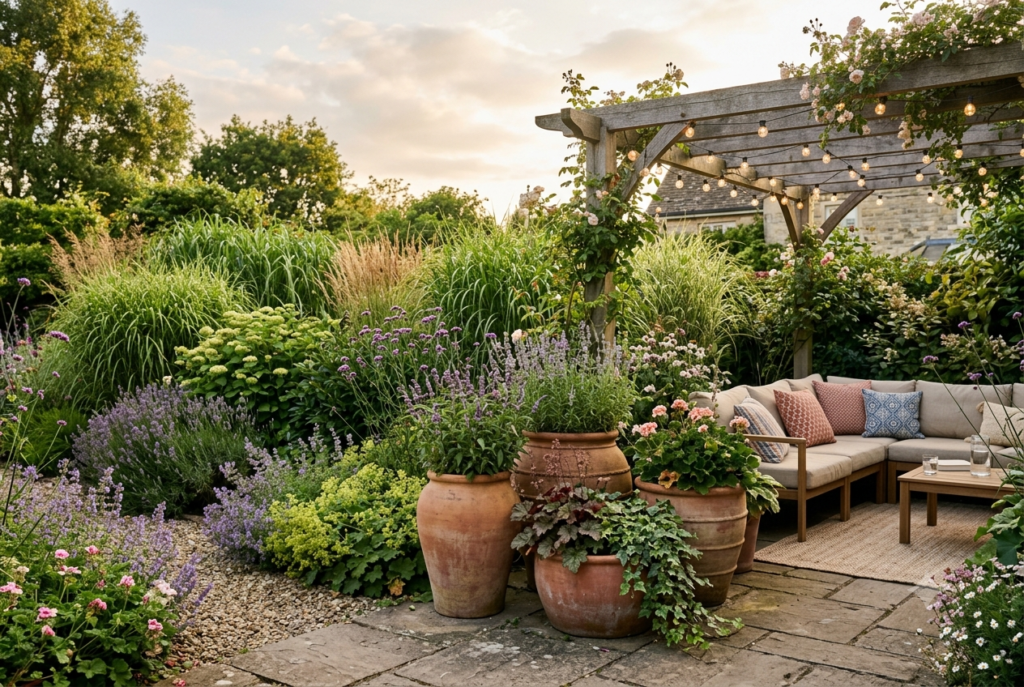
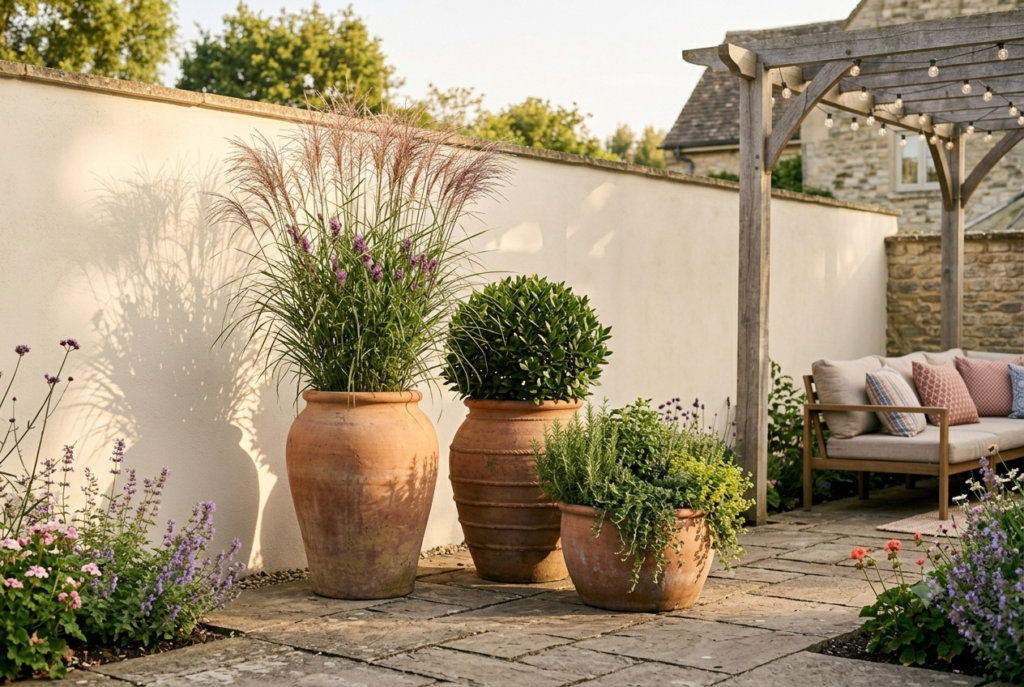
Terracotta has become the defining material of 2026 garden decor — and not just because it looks beautiful. Individual monochrome pots, each in a single matte color, each planted with one species creates a striking look that’s showing up everywhere in 2026 garden design. The deliberateness of this approach is striking compared to the usual mixed-pot chaos that most garden spaces fall into.
The key to making terracotta work in 2026 is scale and commitment. Most people buy pots that are too small — a single large terracotta pot, genuinely oversized, planted with one dramatic specimen plant, does more for a patio or garden entrance than five small pots scattered randomly around. Go bigger than feels comfortable. A pot you’d normally think is too large for the space is almost always exactly the right size.
Choose three colors that work together — sage, terracotta, and dusty blue is a combination showing up everywhere in 2026 garden decor. Paint old plastic or cement pots yourself with exterior matte paint for a fraction of the cost of buying new.
For planting, architectural choices outperform fussy flowering plants in large terracotta statements — a single tall ornamental grass, an olive tree, a clipped bay ball, or a dramatic agave all photograph beautifully and require far less maintenance than seasonal bedding.
What Makes This Work:
- Scale — always go bigger than you think
- One species per pot for the deliberate, considered look
- Consistent pot material even if colors vary
- Position against a wall or fence for maximum visual impact
→ Shop Large Terracotta Garden Pots (Insert your Amazon affiliate link here)
2. Solar Powered Garden Lighting {#solar-lighting}
Best For: Pathways, borders, seating areas, fences
Solar and low-energy lighting has gotten genuinely beautiful in 2026 — no more ugly plastic solar mushrooms. The category has transformed to the point where solar garden lighting is no longer a compromise between eco-friendly and attractive — it is genuinely both.
For lighting that stays: copper or brass wall lanterns age beautifully and look better with every year. Avoid anything chrome or nickel outdoors — it shows fingerprints and weathers badly. This is the single most important material distinction when choosing solar garden lighting — the finish determines whether it looks better or worse as it ages outdoors.
The most effective solar garden lighting approach for 2026 is layered: pathway lights at ground level, wall lanterns at mid-height, and string lights or pendant lights overhead in a seating area. This three-level approach creates exactly the warm, atmospheric evening garden that makes you want to stay outside long after the sun goes down.
Warm amber LED rather than cool white is non-negotiable for atmosphere — cool white solar lights make a garden look like a car park after dark, whereas warm amber creates the kind of soft, flattering light that makes everything look better.
What Makes This Work:
- Warm amber LED color temperature only
- Copper or brass finish for aging beautifully outdoors
- Three height levels for layered atmospheric effect
- Position pathway lights to cast light across surfaces, not just straight up
→ Shop Solar Copper Garden Lanterns (Insert your Amazon affiliate link here)
3. Outdoor Wall Decor {#outdoor-wall-decor}
Best For: Bare fence panels, exterior walls, garden boundary walls
Bare exterior walls do a lot of quiet damage. They flatten the eye, swallow the light, and make even a beautifully planted garden feel half-finished, no matter how much you’ve spent on furniture or florals. This is one of the most consistently overlooked aspects of garden styling — and one of the fastest to fix.
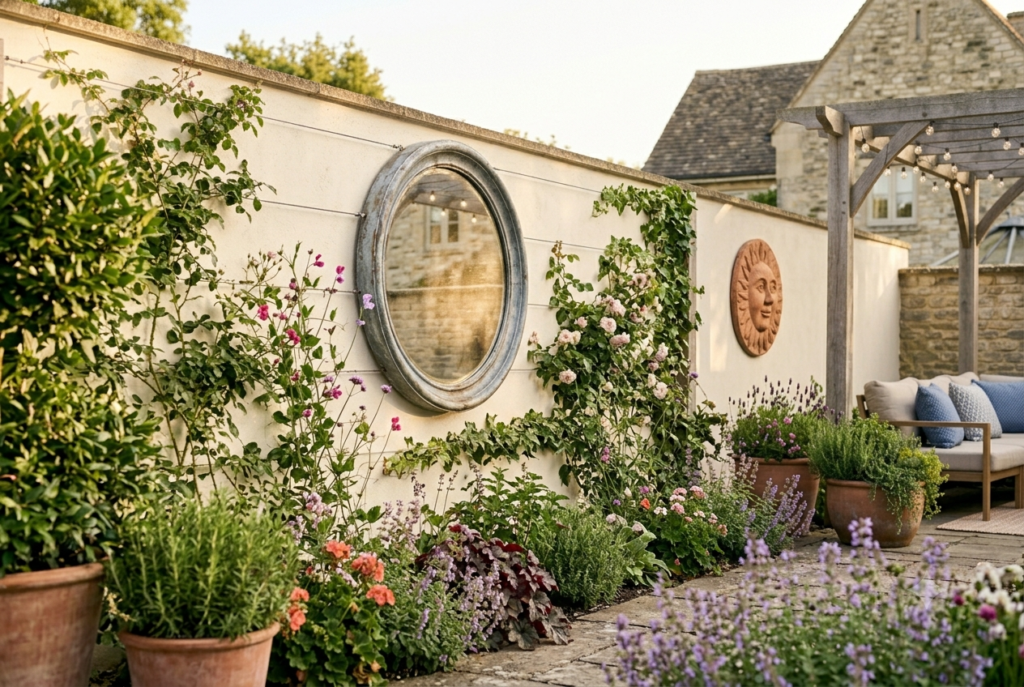
The fix is rarely big. A trellis, a salvaged mirror, a row of terracotta forms catching the afternoon sun. Each one gives the wall a reason to be looked at. Outdoor wall decor in 2026 leans toward natural, tactile materials — woven wall hangings designed for outdoor use, weathered wooden frames, wrought iron shapes, and living wall panels that blur the line between decor and planting.
For fence panels specifically, a simple climbing plant trained along horizontal wires is both the most affordable and the most effective wall treatment available — nothing makes a boundary fence look more considered than greenery growing deliberately across its surface. Combine with a single decorative element at eye height (a weathered mirror, a ceramic wall plaque, a terracotta sun) and the fence becomes an intentional backdrop rather than just a boundary.
What Makes This Work:
- Address at least one bare wall per garden area
- Natural and weathering-friendly materials only
- Mix living elements with decorative ones
- Position decorative elements at seated eye height for maximum impact
→ Shop Outdoor Wall Art Decor (Insert your Amazon affiliate link here)
4. Color Drenched Garden Furniture {#color-furniture}
Best For: Patios, terraces, outdoor dining areas
After years of safe neutrals dominating outdoor furniture trends, color is making a confident and joyful return. For 2026, it’s less about fleeting pops and more about committing to furniture that sets the tone for the entire scheme.
Designer Birdie Fortescue notes that colorful garden furniture brings a sense of optimism to a garden, especially when balanced with natural textures like rattan. Laura Britt of Britt Design Group agrees, saying we’re moving away from the standard black iron look and seeing more powder-coated furniture in unexpected, uplifting colors that instantly bring personality outside.
The most effective approach for 2026 is choosing one piece of color-drenched furniture — a dining chair, a bistro table, a bench — and letting it anchor the outdoor color story rather than mixing multiple colored pieces that compete with each other. A pair of sage green chairs beside a natural wood table, or a single terracotta painted bench against a white wall, delivers far more impact than a patchwork of different colored pieces.
Rather than buying a matching set, mixing and matching looks far more curated and layered. Colorful fabrics for cushion seating and accessories are a big part of the personality-led outdoor trend, bringing warmth to an outside space.
What Makes This Work:
- One anchor color piece rather than multiple competing ones
- Balance color with natural textures like rattan, wood, and stone
- Powder-coated metal for durability in all weather conditions
- Colorful cushion covers for the most budget-friendly version of this look
→ Shop Colorful Outdoor Cushion Covers (Insert your Amazon affiliate link here)
5. Rewilded Planting With Focal Points {#rewilding}
Best For: Garden borders, lawn edges, cottage gardens
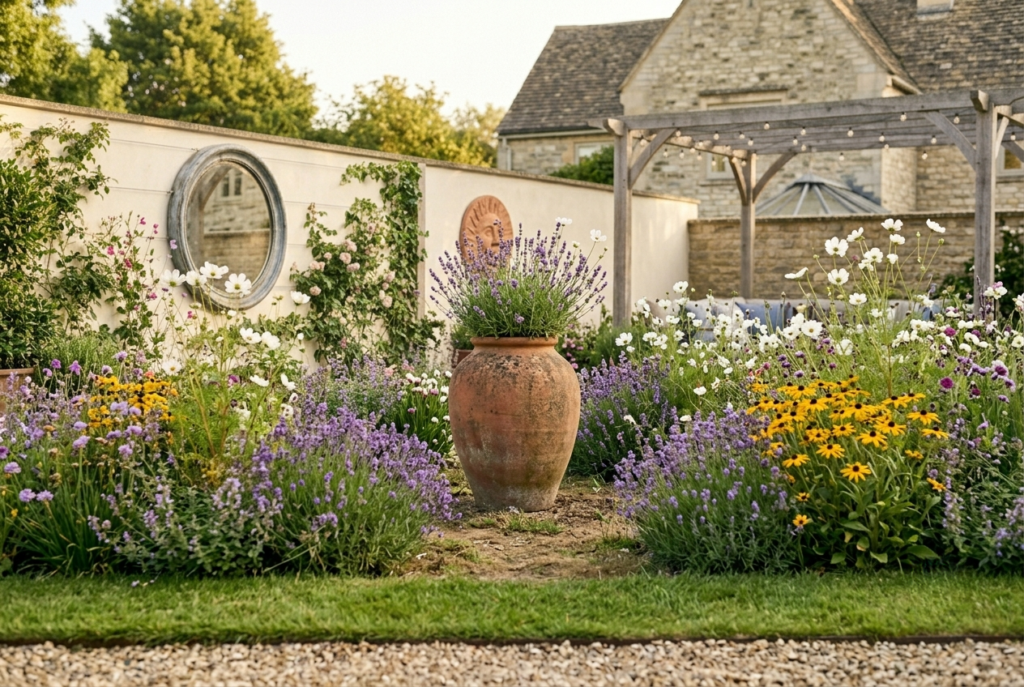
The rewilding trend meets curated design in 2026 — messy naturalistic planting with intentional focal points. Biophilic design principles have jumped from interior spaces to backyards. This is perhaps the most significant garden design shift of the year — the permission to let things be a little wild, paired with the discipline to make that wildness feel intentional rather than neglected.
By mixing wildflowers, herbs, and vegetables, you can create a garden that’s vibrant, functional, and alive with biodiversity. The practical implication for most gardens is straightforward: allow a section of lawn or border to grow more freely, choose plants that self-seed and spread naturally, and then anchor the naturalistic area with one or two clear focal points — a statement pot, a sculptural plant, a garden lantern — that signal this is a deliberate choice rather than a maintenance failure.
The visual effect of this rewilded-but-curated approach is genuinely beautiful: hanging baskets overflow with blooms, while raised planters create a layered garden effect that feels immersive rather than decorative. Every corner offers something to look at, like a living tapestry in motion.
What Makes This Work:
- Define the wild area with a clear mown edge to signal intention
- Anchor with one or two strong focal points within the naturalistic planting
- Choose self-seeding plants that spread without spreading chaos
- Allow seed heads to remain through autumn and winter for continued visual interest
→ Shop Wildflower Seed Mixes (Insert your Amazon affiliate link here)
6. Cozy Outdoor Seating Nook {#seating-nook}
Best For: Garden corners, patio edges, beside a fence or wall
The garden decor ideas resonating most in 2026 aren’t the ones that cost the most or look the most impressive on social media. They’re the ones that make you actually want to spend time outdoors — the cozy corner that invites you to stay. A dedicated outdoor seating nook is the single most-used and most appreciated garden addition for this exact reason.
Outdoor spaces in 2026 are becoming true extensions of the home — relaxed, nature-inspired setups that feel both curated and carefree. Layered textures from woven rugs to cushioned seating give the lived-in feel, like an extension of the home rather than a separate space.
The formula for a genuinely cozy outdoor seating nook is simple: two to three chairs or a small sofa, positioned so they face inward toward each other rather than outward toward the garden, partially enclosed by planting or a structure on at least two sides, with something overhead — a pergola, a large umbrella, or an overhanging tree — to create enclosure. Add outdoor cushions in warm, weather-resistant fabrics, an outdoor rug to define the space, and a small side table for drinks and candles.
Keep seating low and clustered to encourage conversation, especially around a focal piece like a coffee table or tray.
What Makes This Work:
- Position chairs facing inward for a conversation-first layout
- Create partial enclosure on two sides with planting or structure
- Add something overhead for a sense of shelter and intimacy
- An outdoor rug defines the space as a room rather than just furniture on a patio
→ Shop Outdoor Seating Cushions (Insert your Amazon affiliate link here)
7. Vertical Garden Wall {#vertical-garden}
Best For: Small gardens, courtyard spaces, compact patios
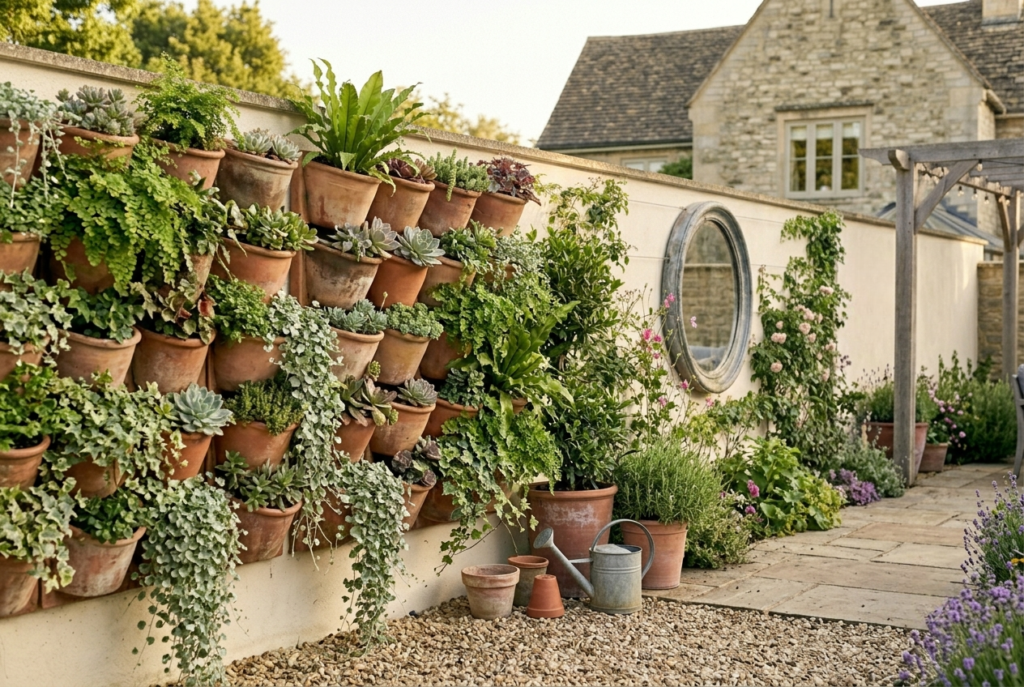
A modular green wall packed with ferns, sedum, and trailing succulents turns a flat exterior surface into a layered tapestry. A smart move for compact courtyards where ground-level planting space is already maxed out. Vertical garden walls solve the most common small garden problem — the desire for abundant planting in a space where the ground area simply isn’t large enough to accommodate it.
Modern vertical garden systems have become significantly more practical and more beautiful than earlier versions. Modular pocket planters in terracotta or neutral tones, mounted to a fence or exterior wall, allow a genuinely impressive planting display without taking up any floor space. Self-watering versions reduce the maintenance commitment to near zero once established.
The planting choices for a vertical garden matter enormously. Trailing and cascading plants — ivy, string of pearls, trailing nasturtiums — use gravity to amplify the visual effect of a vertical display. Mixing leaf textures and tones, rather than trying to get everything flowering simultaneously, creates a green tapestry that looks beautiful year-round rather than just during one brief flowering window.
What Makes This Work:
- Choose trailing and cascading plants to amplify the vertical effect
- Mix leaf textures and green tones rather than chasing simultaneous flowering
- Self-watering systems make vertical gardens genuinely sustainable without constant attention
- Position on the most-viewed wall for maximum impact
→ Shop Vertical Garden Planters (Insert your Amazon affiliate link here)
8. Garden Mirror {#garden-mirror}
Best For: Small gardens, shaded spaces, garden walls and fences
A clustered arrangement of round, oval, and rectangular mirrors in mixed gold and dark frames, bouncing greenery and light back across the path. The wall becomes a window, the garden doubles in depth. An outdoor mirror is one of the most effective small garden tricks available — creating the illusion of space beyond the boundary and reflecting light into shaded corners that natural sunlight never quite reaches.
The key to an outdoor mirror that works: position it so it reflects the most beautiful part of your garden back at itself — a planted border, a seating area, a specimen tree. A mirror that reflects a fence panel undoes its own effect entirely. Position deliberately, secure firmly, and choose a frame material that weathers well — wrought iron, powder-coated steel, or weatherproof rattan all hold up better than painted wood over multiple seasons.
For safety, always use acrylic mirror panels rather than glass in garden settings. Acrylic is genuinely shatterproof, significantly lighter for wall-mounting on fence panels, and produces exactly the same reflective effect as glass at a fraction of the weight.
What Makes This Work:
- Position to reflect the best view in your garden, not a bare fence
- Acrylic rather than glass for safety and weight
- Frame in weatherproof materials — iron, powder-coated steel, or rattan
- One large mirror always outperforms several small ones
→ Shop Outdoor Garden Mirrors (Insert your Amazon affiliate link here)
9. Upcycled Planter Ideas {#upcycled-planters}
Best For: Any garden area, balconies, patios
Upcycling is mainstream in 2026 — turning old furniture, pipes, and containers into garden art. This shift reflects a broader design maturity: the recognition that a garden with genuine character and individuality looks more interesting than a garden full of matching, newly-purchased items from the same retailer.
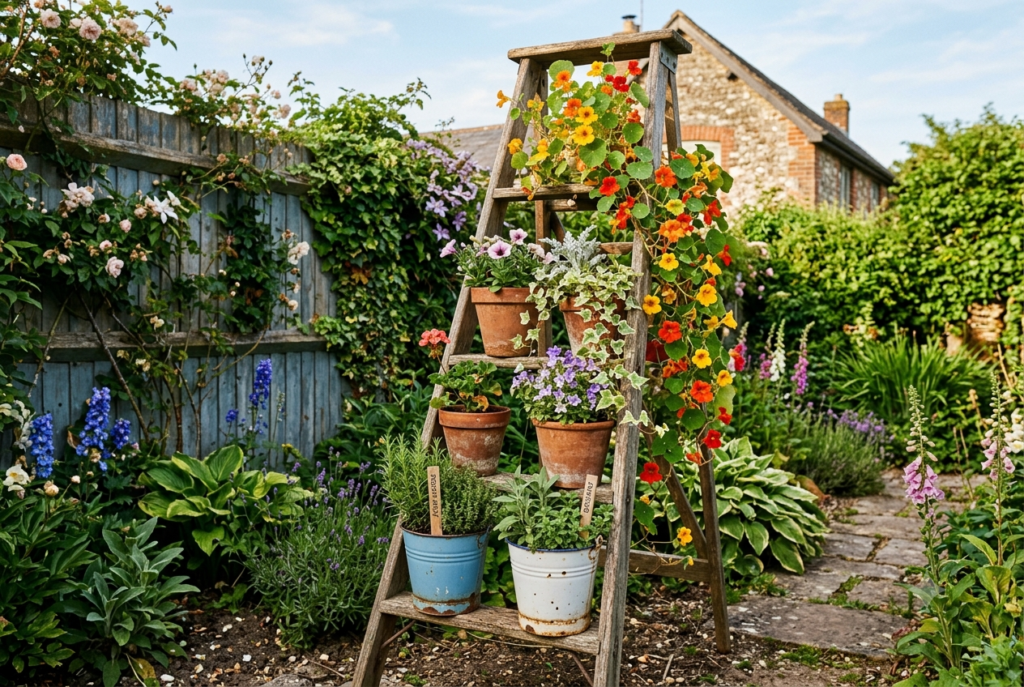
A weathered ladder becomes a focal point with each step feeling like a tiny stage, holding soft florals, aged pots, and little vintage finds that seem collected over time. Against the wooden fence, it blends in while still catching your eye. Nothing feels overstyled, just gently placed, like you added pieces as you found them.
The most successful upcycled planters share one quality: they look like they belong in a garden rather than looking like salvaged items that ended up outside by accident. An old tin watering can planted with trailing nasturtiums. A wooden wine crate mounted on a fence, lined with hessian, and planted with herbs. A collection of mismatched enamel buckets at different heights on a garden step. Each of these takes minutes to create and adds a personal, collected quality that no catalog purchase can replicate.
What Makes This Work:
- Choose items with natural patina — rust, weathering, and age add rather than detract
- Plant generously so the planter reads as intentional rather than random
- Group upcycled planters together rather than placing them in isolation
- Keep the planting consistent in color tone even if the containers differ
→ Shop Enamel Bucket Planters (Insert your Amazon affiliate link here)
10. Outdoor String Lights {#string-lights}
Best For: Seating areas, pergolas, trees, garden perimeters
Outdoor string lights are the single most transformative evening garden upgrade available for the least money — and they have remained consistently popular precisely because they genuinely deliver on the promise of making an outdoor space feel magical after dark. The warm, flickering quality of a good string light strung between trees or draped across a pergola creates an atmosphere that no garden floodlight or harsh spotlight can replicate.
In 2026, backyards are extensions of your home’s personality — think statement lighting and design-forward details that blur the line between indoor comfort and outdoor living. String lights are the most accessible version of this principle — genuinely beautiful, universally appealing, and appropriate at every budget level.
The specific choice that separates garden string lights that look good from those that look cheap: Edison-style warm LED bulbs on a black or copper-colored cable, hung at approximately two-meter intervals between anchor points. The exposed bulb style looks significantly more intentional and more design-forward than the small fairy light style, which has become strongly associated with temporary and budget setups rather than a considered garden aesthetic.
What Makes This Work:
- Edison-style exposed bulbs rather than small fairy lights
- Warm amber color temperature only — never cool white
- Black or copper cable for a considered, intentional look
- Hang in a loose drape rather than pulled tight — the sag looks more natural
→ Shop Outdoor Edison String Lights (Insert your Amazon affiliate link here)
11. Water Feature {#water-feature}
Best For: Seating areas, garden focal points, shaded corners
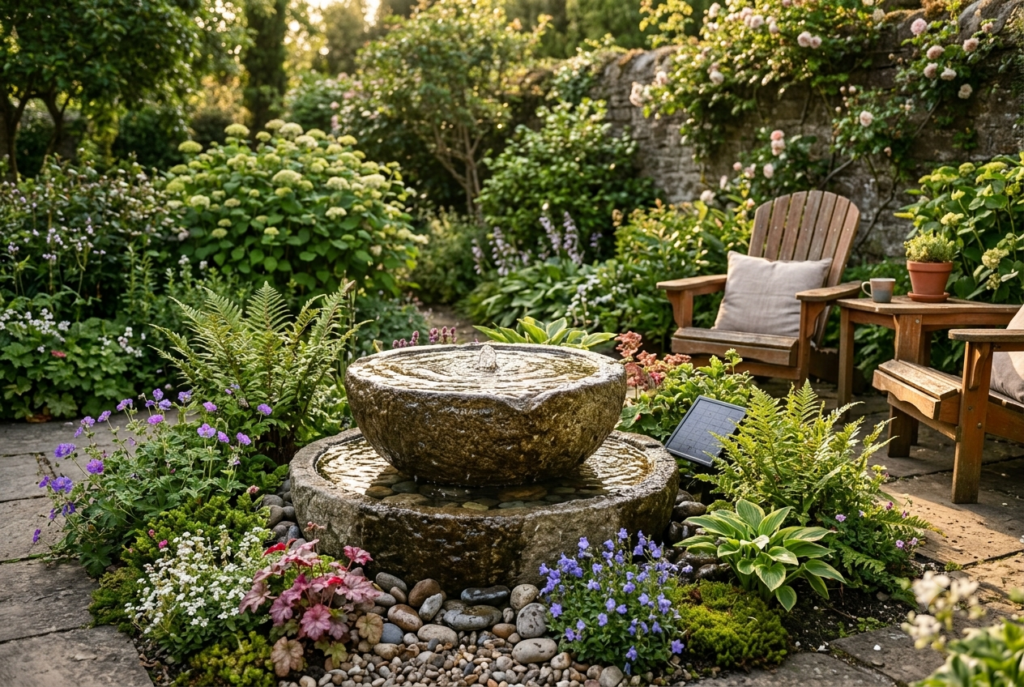
Moving water does something to an outdoor space that no other garden element can replicate. It creates atmosphere, masks urban background noise, attracts wildlife, and adds a sensory dimension to a garden that is immediately perceptible but hard to describe exactly. Even a small self-contained water feature — a bubbling stone, a bowl fountain, a modest wall-mounted spout — delivers this effect completely.
Self-contained water features that recirculate their own water are the most practical choice for most gardens — no plumbing connection required, solar-powered versions available that run for free, and installation achievable in an afternoon without professional help. Sustainable landscaping is about working with nature, not against it — and a solar water feature achieves exactly that while adding genuine sensory beauty.
Position any water feature where you’ll actually hear the sound from your primary seating area. A water feature in the far corner of a large garden, out of earshot from the seating area, delivers very little of the sensory benefit that makes water features valuable. Close proximity to where you sit and spend time in the garden is essential.
What Makes This Work:
- Position within earshot of your primary seating area
- Solar-powered self-contained versions need no installation
- Natural stone or ceramic materials age best outdoors
- Keep surrounding planting low to prevent debris falling into the water
→ Shop Solar Powered Garden Water Features (Insert your Amazon affiliate link here)
12. Garden Pathway Lighting {#pathway-lighting}
Best For: Garden paths, steps, border edges, driveway edges
Pathway lighting transforms how a garden reads after dark — turning a space that disappears at sunset into one that looks genuinely beautiful from inside the house and genuinely inviting to step into in the evening. The practical benefit is obvious: lit pathways are safer to navigate. The aesthetic benefit is equally significant: pools of warm light along a garden path create depth, rhythm, and a sense that the garden continues beyond what you can immediately see.
The strongest pathway lighting choice for 2026 is low-profile spike lights with a warm amber LED and a copper or gunmetal finish — positioned to cast light across the path surface rather than straight upward, which creates dramatic shadow effects on the ground and illuminates the path without creating glare that affects the rest of the garden’s atmosphere. Space them unevenly rather than at military-precise intervals for a more natural, collected look.
What Makes This Work:
- Cast light across the path rather than straight up for dramatic shadow effects
- Space unevenly for a natural rather than institutional look
- Warm amber LED only — cool white kills garden atmosphere
- Copper or gunmetal finish weathers better than chrome or plastic
→ Shop Low Profile Garden Path Lights (Insert your Amazon affiliate link here)
13. Mixed Monochrome Pot Display {#monochrome-pots}
Best For: Patios, steps, garden entrances, balconies
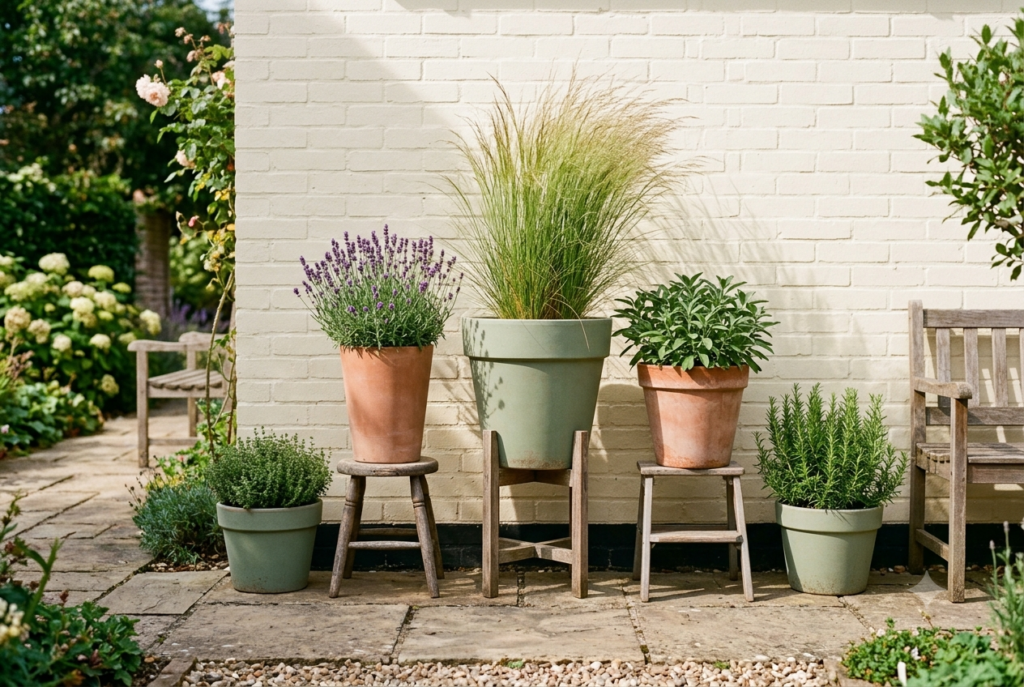
Individual monochrome pots, each in a single matte color, each planted with one species creates an effect that’s deliberate and striking. This works especially well on patios, balconies, and against light-colored walls. Choose three colors that work together — sage, terracotta, and dusty blue is a combination showing up everywhere in 2026 garden decor.
The difference between a pot display that looks designed and one that looks accumulated comes down entirely to this principle of deliberate monochrome grouping. When every pot is a different color, material, and size with different plants, the overall effect is chaotic regardless of how attractive each individual element might be. When pots share a material and are grouped by color, even mismatched sizes and plant species create coherence and visual calm.
For the most current 2026 execution: group five to seven pots of the same material and color family at slightly different heights, each with a single plant species. The height variation creates the visual interest. The color and material consistency creates the calm. Together they deliver exactly the kind of “quietly considered” garden aesthetic that defines the best outdoor spaces of the year.
What Makes This Work:
- Same material across the group even if colors vary slightly
- One species per pot for maximum deliberateness
- Vary heights significantly — from floor level to waist height
- Three tone combinations work better than two or five
→ Shop Matte Ceramic Garden Pots Set (Insert your Amazon affiliate link here)
14. Pergola Or Garden Structure {#pergola}
Best For: Patios, seating areas, garden focal points
A bold black pergola sets the tone instantly, creating contrast that feels both modern and cocooning. Draped white curtains bring in movement and softness, catching the breeze in a way that makes the whole setup feel like an outdoor living room rather than just a patio.
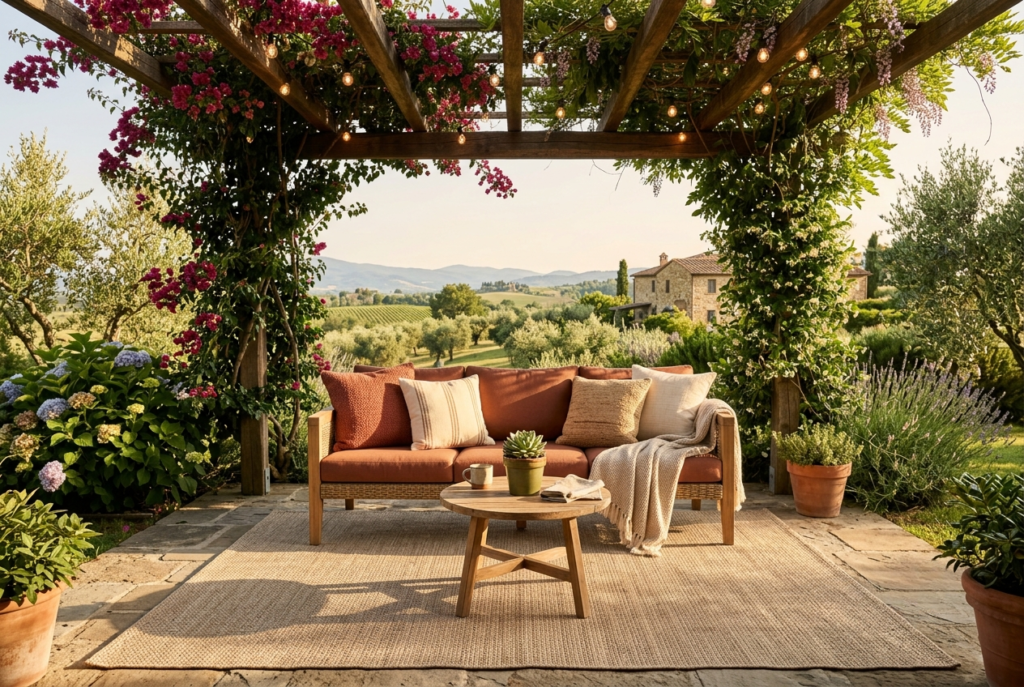
A garden structure — whether a full pergola, a simple arch, or even a sail shade — solves the most fundamental problem with outdoor spaces: they lack the vertical enclosure that makes indoor rooms feel comfortable. A seating area with nothing overhead feels exposed. The same seating area under a pergola or structure feels like a room, and that shift in perception completely changes how much time you want to spend in the space.
Under a pergola draped in flowers, the seating area feels like stepping into a garden in full bloom. Soft cushions and classic furniture shapes keep it grounded while the florals take center stage. Let climbing plants do the heavy lifting, and keep furniture neutral so the color story stays fresh and balanced.
Flat-pack pergola kits have become genuinely impressive in quality and aesthetics — a charcoal or black powder-coated steel pergola now reads as architectural and deliberate rather than DIY. Installation typically takes a weekend and requires no professional help.
What Makes This Work:
- A structure transforms a seating area from furniture to a room
- Let climbing plants provide the overhead ceiling over time
- Keep furniture neutral under a planted pergola — the plants are the feature
- Position to capture the best view of the garden from within
→ Shop Garden Pergola Kits (Insert your Amazon affiliate link here)
15. Outdoor Rug And Textile Layer {#outdoor-rug}
Best For: Patios, decking, outdoor seating areas
An outdoor rug is the single fastest way to transform a patio or decking area from a hard surface with furniture on it to a defined outdoor room. The rug does exactly what an indoor rug does — it anchors the seating area, softens the surface, adds warmth underfoot, and signals that this space has been designed rather than just furnished.
Combining textiles with varying textures creates depth without needing bold colors. The layered look gives that lived-in feel, like an extension of the home rather than a separate space. It feels effortless but considered.
The most common mistake with outdoor rugs: buying one too small. An outdoor rug should be large enough that all four legs of your seating furniture sit either entirely on it, or at minimum have front legs on it — anything smaller makes the furniture look disconnected from the space rather than anchored to it. Outdoor-specific rugs in polypropylene or recycled plastic weave are genuinely weather-resistant, easy to hose down, and now come in attractive textures that look like natural fiber from a few feet away.
What Makes This Work:
- Go larger than feels comfortable — a too-small rug is worse than no rug
- All or at minimum front furniture legs on the rug
- Outdoor-specific material — polypropylene or recycled plastic weave
- Warm neutral tones in a natural texture finish
→ Shop Large Outdoor Patio Rugs (Insert your Amazon affiliate link here)
16. Edible And Ornamental Planting Mix {#edible-ornamental}
Best For: Garden borders, raised beds, patio containers
By mixing wildflowers, herbs, and vegetables, you can create a garden that’s vibrant, functional, and alive with biodiversity. The era of keeping the vegetable patch hidden at the bottom of the garden in an embarrassed corner is definitively over in 2026. Mixing edible and ornamental plants in the same border or container is one of the most coherent and satisfying garden design approaches of the year.
Herbs like rosemary, lavender, bronze fennel, and purple sage are as beautiful as most ornamental plants while being genuinely useful in the kitchen. Rainbow chard has striking colored stems that look decorative in a mixed border. Climbing beans add vertical interest to structures that would otherwise be bare trellises. Fruit trees in containers become statement pieces on a patio while producing actual fruit through the season.
Beyond the aesthetic appeal, gardens that produce food change how you relate to outdoor space — you visit more frequently, pay closer attention to what’s growing, and feel a more active connection to the garden rather than a passive admiration of it from a distance.
What Makes This Work:
- Choose herbs with strong visual presence as well as practical use
- Let vegetables with attractive stems and leaves take border positions rather than hiding them
- Container fruit trees create instant statement pieces on patios
- Mix heights — climbing edibles on structures alongside low herbs at border edges
→ Shop Herb Garden Starter Kits (Insert your Amazon affiliate link here)
17. Garden Art And Sculpture {#garden-art}
Best For: Border focal points, pathway ends, lawn features
Using plants themselves as the sculpture is one of the most genuinely useful garden decor ideas in 2026. But beyond living sculpture, deliberately chosen garden art and decorative objects have become increasingly important as gardens become more considered extensions of interior design thinking rather than purely horticultural spaces.
The most effective garden art in 2026 is subtle rather than loud — a single weathered ceramic piece at the end of a garden path, a simple abstract metal form catching the light at the back of a border, a carved wooden element leaning against a garden wall. The key is choosing one piece that genuinely earns its place rather than dotting the garden with multiple decorative items that compete for attention.
The storytelling in a garden’s decorative elements matters enormously. Every piece that feels like it has a past makes a garden feel truly yours. It’s not just decor — it’s personality on display. Sourcing garden art from markets, estate sales, and independent makers rather than from mass-market garden centers delivers exactly this quality of personal character.
What Makes This Work:
- One strong piece rather than several mediocre ones
- Position at the end of a sightline — path end, border back, garden entrance
- Natural materials that improve with weathering — ceramic, stone, cast iron
- Personal rather than generic — avoid mass-produced garden ornaments
→ Shop Garden Sculptures And Art (Insert your Amazon affiliate link here)
18. Sustainable Garden Materials {#sustainable-materials}
Best For: Hardscaping choices, furniture, planters, pathways
Sustainable luxury is one of the steadiest design rises of 2026, seeing a significant increase in popularity. Sustainability no longer means sacrificing style — it’s about blending eco-conscious choices with high-end aesthetics to create outdoor spaces that feel luxurious yet responsible.
The warmth and authenticity of organic materials like wood, stone, and bamboo offer timeless charm. These elements help create outdoor spaces that are both inviting and harmonious with nature. The practical implication for garden decor choices is straightforward: materials that come from natural sources, weather gracefully, and do not contribute to plastic waste are simultaneously the most sustainable and the most beautiful choices for outdoor spaces.
Cheap materials outdoors consistently disappoint. What looks great in a store photo often doesn’t survive one winter. Invest in quality for hardscape items you can’t easily replace. This is genuinely good advice from a practical as well as aesthetic standpoint — a terracotta pot bought once for thirty dollars will outlast three cycles of cheap plastic alternatives and look better with every season that passes.
What Makes This Work:
- Natural materials — stone, terracotta, timber, bamboo — age well and look better over time
- Recycled plastic weave for outdoor textiles that are genuinely weather-proof
- Solar-powered everything where possible — lighting, water features, irrigation
- Buy once, buy quality — especially for hardscape items that are difficult to replace
→ Shop Recycled Material Garden Furniture (Insert your Amazon affiliate link here)
19. Fire Pit Or Heat Source {#fire-pit}
Best For: Outdoor seating areas, patio spaces, garden entertaining areas
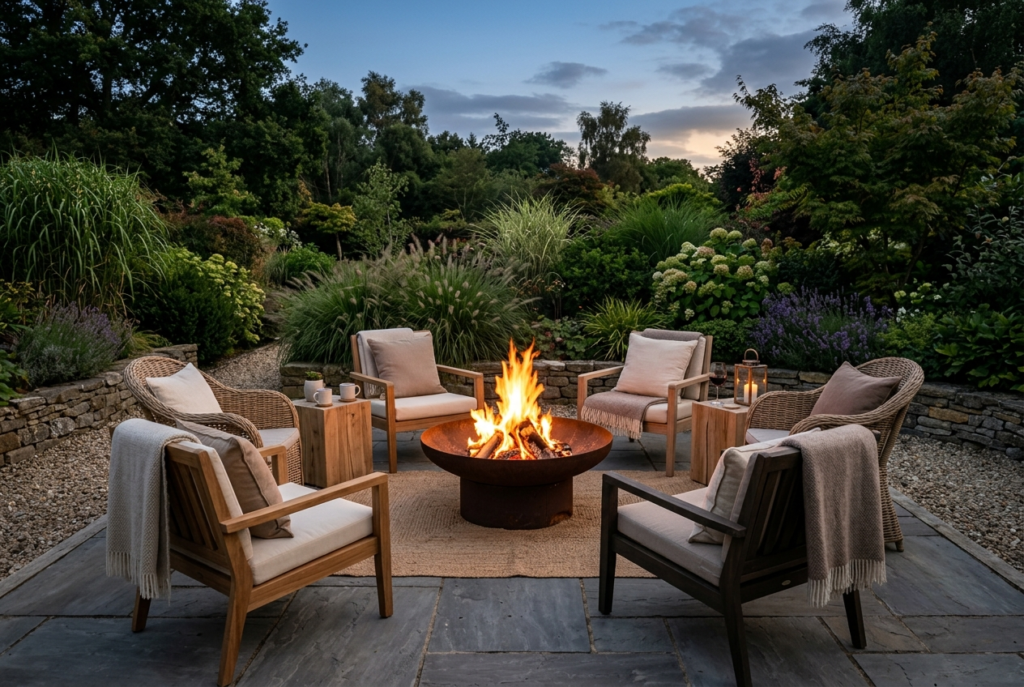
Modern minimal fire pit yards reflect the 2026 trend toward outdoor spaces that feel as considered and designed as interior rooms. A fire pit or outdoor heat source extends the usable season of any garden space, keeping patios and seating areas genuinely comfortable from early spring through late autumn rather than limiting outdoor living to the warmest months of summer.
The choice between a wood-burning fire pit, a gas fire table, and a propane patio heater comes down primarily to your garden’s situation — wood-burning offers the most atmosphere and the most authentic fire experience but requires more management and produces smoke; gas fire tables offer clean, controlled heat with genuine visual impact; propane patio heaters offer the most flexibility and the easiest operation but the least visual appeal as a focal point.
For a garden where the fire element is primarily about atmosphere and focal point rather than maximum heat output, a simple wood-burning fire pit in corten steel or cast iron placed at the center of the seating arrangement is the strongest design choice. The warm amber light of real fire in the evening is something that artificial heat sources simply cannot replicate.
What Makes This Work:
- Position at the center of the seating arrangement for maximum communal benefit
- Corten steel or cast iron for materials that weather beautifully outdoors
- Keep a consistent safe distance between the fire pit and any fabric elements
- Stock quality firewood in a visible storage area — it becomes a decorative element itself
→ Shop Garden Fire Pits (Insert your Amazon affiliate link here)
20. Outdoor Kitchen Or Bar Cart {#outdoor-kitchen}
Best For: Patios, outdoor entertaining areas, garden dining spaces
In 2026, backyards are no longer just extra space — they’re extensions of your home’s personality, designed for hosting without losing comfort. An outdoor kitchen, or even a simple styled bar cart, takes outdoor entertaining from something you improvise indoors and carry outside, to something that happens naturally in the garden with everything in its right place.
A full outdoor kitchen — built-in grill, prep surface, refrigeration, sink — is a significant investment appropriate for gardens used regularly for outdoor cooking. But the same principle can be achieved far more accessibly with a weatherproof bar cart or butcher block trolley that lives on the patio, stocked with outdoor essentials and styled with a small plant, a lantern, and a tray for serving.
The bar cart specifically has become one of the most pinned outdoor decor ideas on Pinterest for exactly this reason — it delivers the aesthetic and functional benefit of a dedicated outdoor hospitality area for a fraction of the cost and effort of a built-in kitchen, while still making the garden feel like a complete, considered space rather than an afterthought.
What Makes This Work:
- Keep essentials permanently stocked so outdoor entertaining requires no indoor trips
- A plant, lantern, and tray on the bar cart makes it look styled rather than purely functional
- Weatherproof materials are essential — bamboo, teak, powder-coated steel
- Position near the seating area for easy reach during outdoor gatherings
→ Shop Outdoor Bar Carts (Insert your Amazon affiliate link here)
The One Garden Decor Mistake Most People Make
Before closing, one piece of honest advice that most garden decor guides don’t say directly enough.
Following trends too rigidly produces gardens that impress on social media and feel hollow in person. The best gardens have a personal vision, not just the top ten trends executed perfectly. Let yourself experiment.
The garden decor ideas in this guide are not a checklist to execute simultaneously. Pick two or three that genuinely resonate with how you use your outdoor space and how you want it to feel, and do those two or three things well. A garden with one great seating nook, one strong pot display, and excellent pathway lighting will consistently outperform a garden that has attempted all twenty ideas at once and delivered none of them with commitment.
Start with one thing. Do it properly. Then see what the garden tells you it needs next.
Frequently Asked Questions
Q: What are the biggest garden decor trends for 2026? The dominant themes are the return of personality and color after years of safe neutral outdoor furniture, the rewilding movement combining naturalistic planting with intentional focal points, sustainable luxury using materials that age beautifully, and the treatment of outdoor spaces as genuine extensions of the home’s interior design rather than separate functional areas.
Q: How do I make a small garden look bigger? Use a large mirror positioned to reflect the best view of the garden. Choose furniture with visible legs rather than solid floor-touching bases. Use vertical space with climbing plants and vertical garden walls rather than taking up floor space. Keep the ground plane simple with a single large rug or consistent paving rather than many small competing elements.
Q: What garden decor looks good all year round? Focus on structural elements that perform in every season — terracotta pots with evergreen or architectural plants, garden lighting, a fire pit or heat source, quality outdoor furniture, and a pergola or garden structure. These elements look intentional and attractive regardless of whether everything is in bloom.
Q: What outdoor lighting makes a garden look best at night? Warm amber LED in every situation — pathway lights, string lights, wall lanterns, and spotlights. Cool white outdoor lighting makes gardens look institutional after dark. Layered lighting at three heights — ground level, mid height, and overhead — creates the most atmospheric and beautiful evening garden effect.
Q: How do I decorate a garden on a budget? Start with upcycled planters and a wildflower seed mix — both are near-zero cost and deliver genuine visual impact. Paint existing plastic or concrete pots with exterior matte paint in three complementary tones. Add solar pathway lights along any existing path. Hang a mirror on the most visible fence panel. These four changes together can transform a garden’s appearance for under fifty dollars total.
Conclusion
A garden that genuinely looks designed comes from the same place as a room that genuinely looks designed — deliberate choices, made with confidence, layered gradually rather than all at once.
Start with one thing. Buy one terracotta pot of a size you’d normally think is too big. Plant it with one dramatic species. Position it where it can be seen from your primary seating area. See what that single decision does to the whole space. Then let the garden tell you what comes next.
That approach — specific, committed, patient — is what separates gardens that look designed from gardens that look like they’re still waiting to become something.