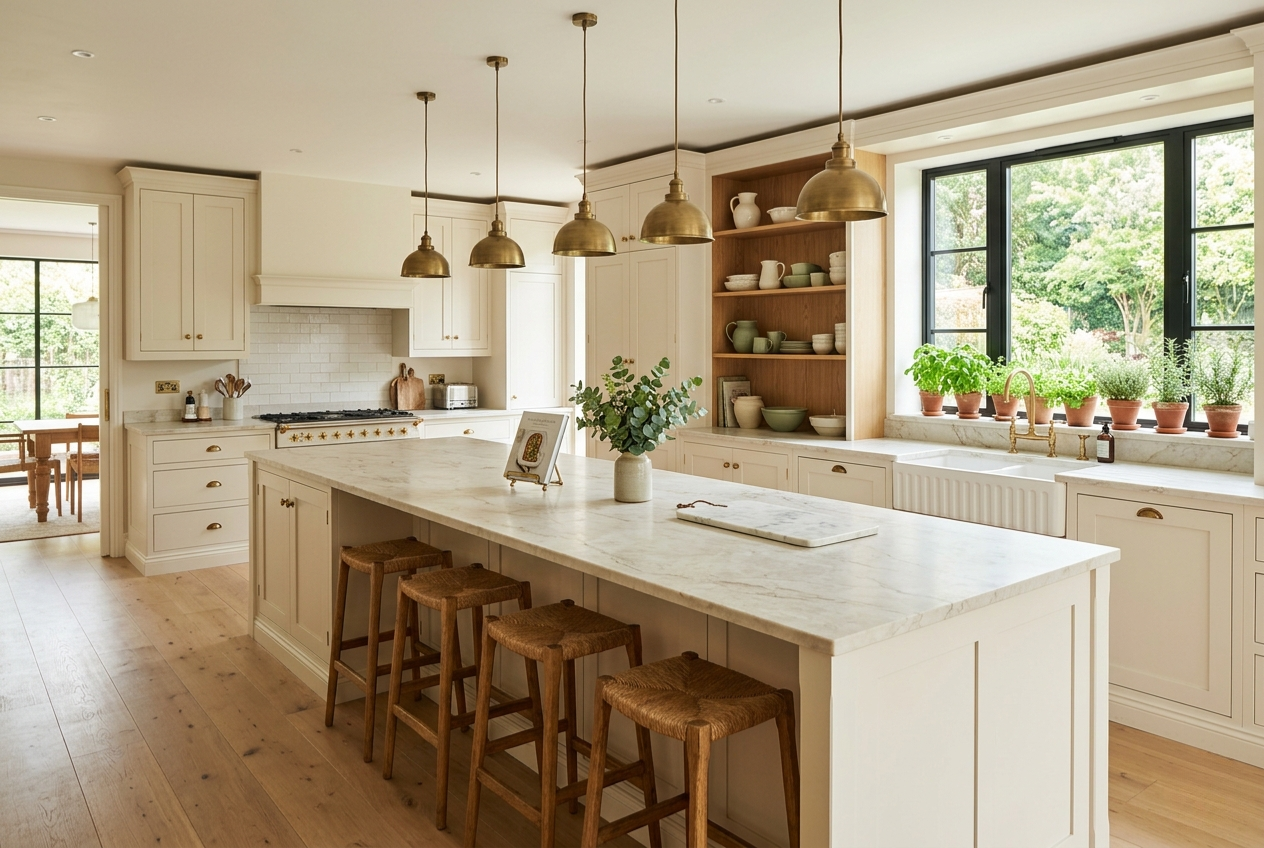
Discover 18 budget kitchen decor ideas that make your kitchen look expensive without a renovation. Real upgrades, real results, any budget.
Nobody announces that their kitchen looks cheap. But most people feel it every single morning — standing at the counter making coffee, looking around at cabinets that feel dated, surfaces that feel tired, and a space that somehow never looks like the kitchens they save on Pinterest.
Here is what the design industry quietly knows and rarely says loudly enough: the difference between a kitchen that looks expensive and one that doesn’t is almost never about the cabinets, the countertops, or the appliances. It is almost always about four things — light, hardware, color, and the discipline to edit.
These 18 budget kitchen decor ideas target exactly those four things. No renovation required. No contractor needed. Most of these changes can be done in a single weekend for less than the cost of a dinner out. And the results are the kind that make people walk into your kitchen and ask what you changed without being able to put their finger on exactly what it was.
That is the goal. Let’s get there.
What You’ll Learn
- The single cheapest upgrade that makes the biggest visual difference in any kitchen
- Why your lighting is probably making your kitchen look worse than it actually is
- The hardware swap that designers use to make builder-grade kitchens look custom
- How to style open shelving so it looks intentional rather than cluttered
- Which 2026 kitchen color trends work on any budget and why they matter
1. Swap Your Cabinet Hardware — It Changes Everything
If there is one upgrade on this entire list that delivers the most visual impact for the least money, it is this one. Cabinet hardware is the jewelry of a kitchen. The right pieces make everything around them look more considered, more expensive, and more intentional. The wrong pieces — or worse, the default builder-grade hardware that came with the kitchen — make even good cabinets look generic.
In 2026, kitchen hardware is trending toward warmth and personality. Soft brass, mixed metals, and slightly sculptural shapes that feel collected rather than matchy are dominating the space. The good news is that you do not need to replace every single handle and knob in your kitchen to feel the difference. Start with the most visible cabinets — the upper cabinets at eye level and the drawers you open most often. Replace those first and see how the rest of the kitchen looks in comparison.
For finish, warm brass and brushed gold are the strongest choices right now for making a kitchen feel expensive. Matte black works beautifully in more contemporary spaces. Satin nickel is the safe choice if you are unsure. Whatever you choose, keep the finish consistent across the kitchen — mixing three different metal finishes is one of the fastest ways to make a space look uncoordinated.
A full set of cabinet hardware for an average kitchen costs between $50 and $150 depending on the style. The transformation it delivers is worth five times that at minimum.
Takeaway: New hardware is the single highest-return upgrade available to any kitchen on any budget.
2. Paint Your Walls A Color That Actually Does Something
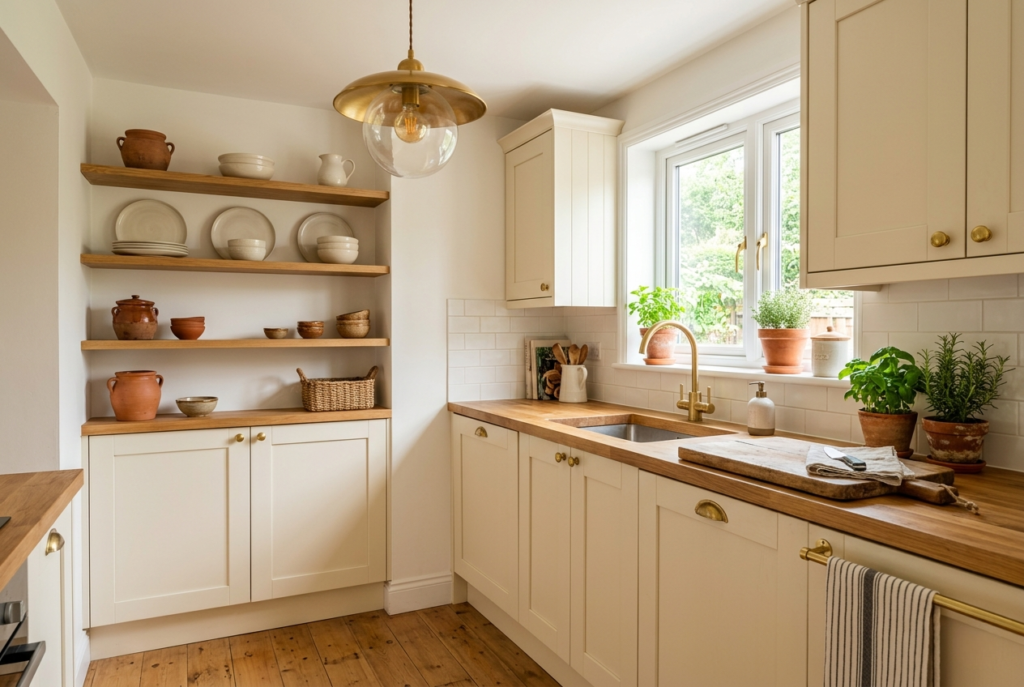
White walls in a kitchen are not neutral. They are a choice — and increasingly, it is a choice that makes kitchens feel cold, flat, and unfinished rather than clean and bright. Design directors consistently say that for maximum impact on a moderate budget, paint is the most powerful tool available. The goal is to go richer and more intentional — moody neutrals, softened earth tones, or even a confident color can instantly make a kitchen feel custom and current.
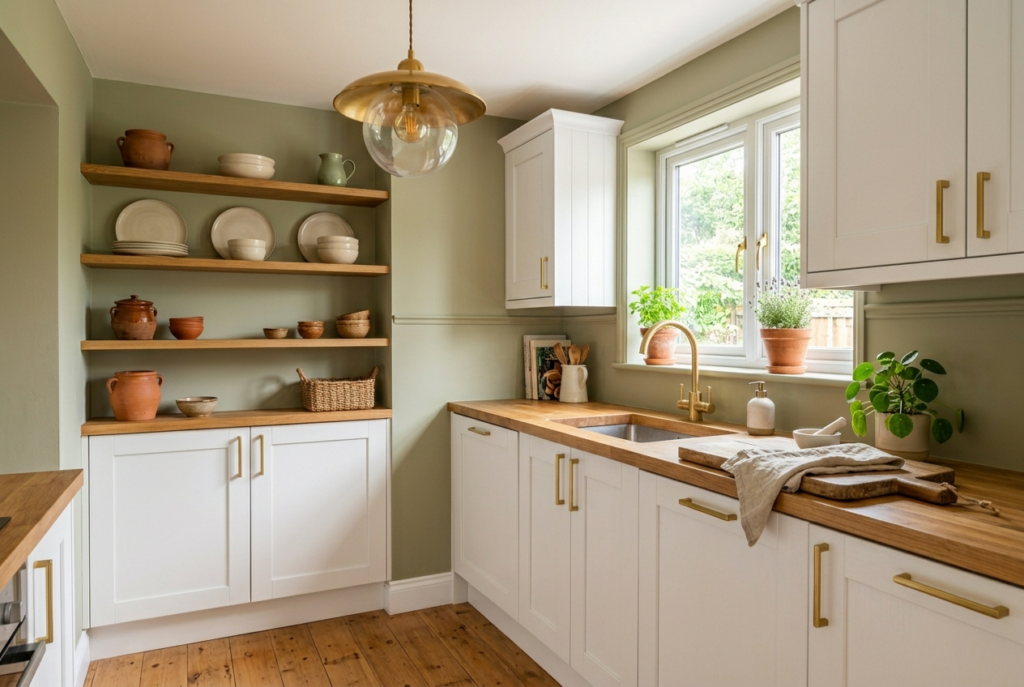
For 2026 specifically, the strongest kitchen wall colors are warm rather than cool. Warm cream and soft ivory tones are overtaking stark whites to create spaces that feel brighter, more inviting, and inherently more residential. Beyond warm whites, sage green has become one of the most universally flattering kitchen colors available — it works with almost every cabinet color, pairs beautifully with brass or warm wood accents, and photographs exceptionally well for anyone using their kitchen in content or listing photography.
If painting the whole kitchen feels overwhelming, start with just one wall — the wall your eye lands on when you walk in, or the wall behind your open shelving if you have it. One well-chosen wall color in a kitchen does more than four walls of the wrong white.
Takeaway: The right paint color makes a kitchen feel designed. The wrong white makes it feel unfinished.
3. Upgrade Your Lighting — Both The Fixtures And The Bulbs
Well-planned lighting is one of the most critical details for making a kitchen feel warm, welcoming, and expensive-looking — and it is one of the most consistently cited upgrades by professional designers. Most standard kitchens have a single overhead light that does a competent but uninspiring job of illuminating the whole room at once. The result is flat, shadowless light that makes every surface look ordinary.
The upgrade has two parts. First, swap any cool white or daylight bulbs for warm white ones (2700K to 3000K). This single change — which costs a few dollars per bulb — transforms the mood of a kitchen immediately. Warm light makes timber look richer, makes white surfaces look creamier, and makes the whole space feel more like a room someone chose to design rather than a functional box.
Second, add layered lighting wherever possible. Pendant lights, LED strips, and under-cabinet lighting are essential elements of 2026 kitchen design. These lighting solutions enhance visibility and create a warm, inviting atmosphere without requiring large investment. Under-cabinet LED strips that illuminate your countertops are available for under $30 and are one of the most impactful lighting additions available to any kitchen. A single pendant light over an island or dining area adds a focal point and a design statement simultaneously.
Takeaway: Lighting is doing more to make your kitchen look cheap than almost anything else — and it is one of the cheapest things to fix.
4. Style Your Counter Tops With Intention
Cluttered counters are one of the primary reasons kitchens feel chaotic and cheap even when the underlying bones are actually decent. Clear counters look expensive. Crowded counters look like storage has run out. The most transformative thing many people can do for their kitchen requires spending nothing at all — just editing what is currently sitting on the counter.
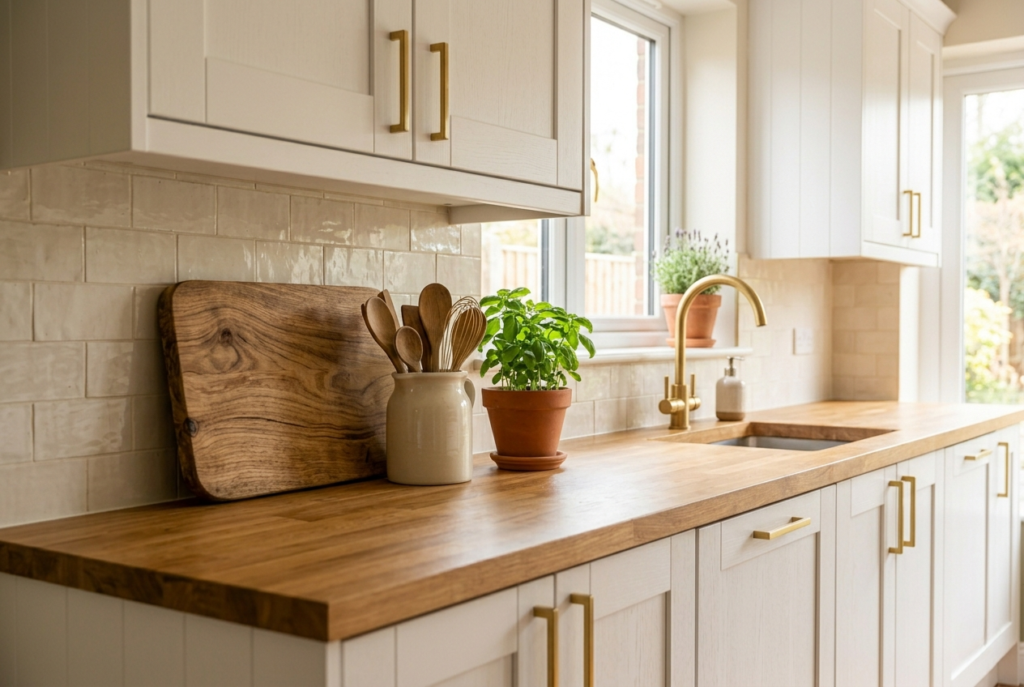
The rule is simple: only keep on the counter what is both used daily and worth looking at. A good quality kettle or coffee machine in a consistent finish. A wooden chopping board leaning against the splashback. A ceramic utensil holder with a few well-used tools. A small plant or a bunch of fresh herbs in a simple pot. That is a counter that looks styled. Everything else goes into a cupboard.
Once you have edited down to the essentials, you can add one or two intentional decorative elements — a small ceramic bowl, a single candle, a beautiful cookbook stood upright. These additions feel like choices rather than clutter because the counter around them has breathing space. Breathing space is what expensive kitchens have that cheap kitchens don’t.
Takeaway: Editing your counters costs nothing and delivers more visual impact than most purchases ever will.
5. Add Open Shelving — Or Style The Shelving You Already Have
Open shelving is one of the strongest visual tools in a kitchen because it turns functional storage into a design element. Done well, it looks intentional, airy, and expensive. Done badly, it looks like a shelf full of random objects that didn’t fit in the cupboards.
The difference between the two is editing and consistency. On open kitchen shelves, every object should either be useful or beautiful — ideally both. Consistent ceramic or stoneware in two or three tones (cream, warm grey, terracotta, or sage green work beautifully in 2026 kitchens). Glassware grouped together rather than scattered. A small plant at one end. A cookbook or two. Nothing that is purely functional and ugly — those items live behind closed doors.
One of the most effective upgrades for making a kitchen look more custom is replacing the wall cabinets directly next to your range hood with open shelves. It instantly opens up the room and creates a more bespoke look. This is a relatively simple DIY job that costs the price of a shelf bracket and a board, and the visual impact on the whole kitchen is significant.
Takeaway: Styled open shelving turns your kitchen storage into a design feature rather than a necessity to hide.
6. Replace Or Update Your Backsplash On A Budget
The backsplash is one of the most visually prominent surfaces in any kitchen — and one of the most expensive to replace properly. But there are several budget approaches that achieve a genuinely good result without committing to permanent tile work or a large spend.
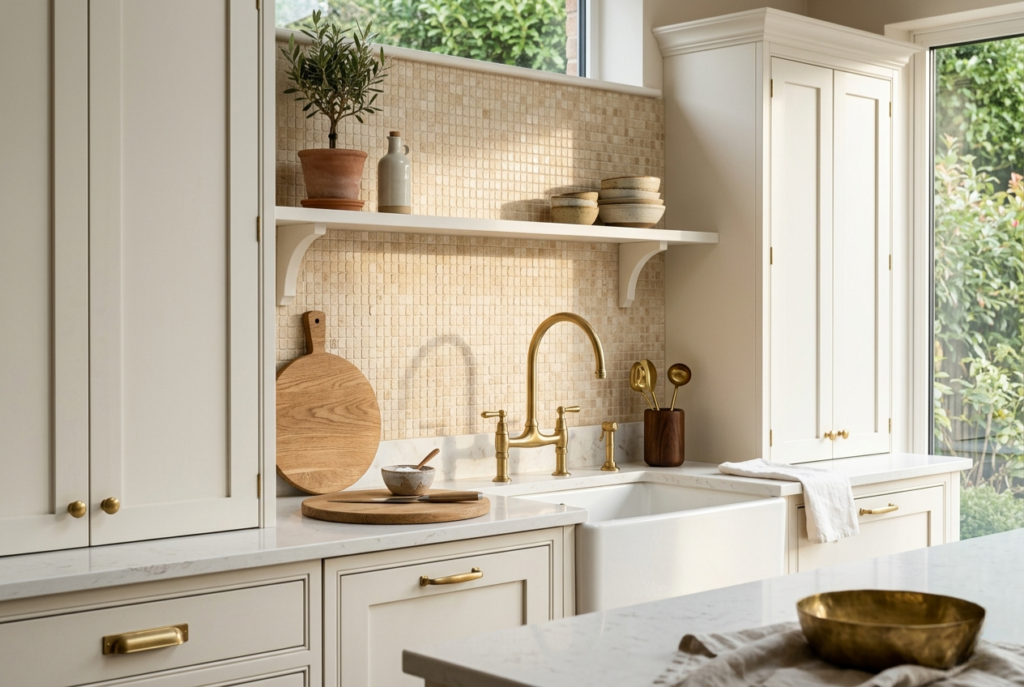
Peel-and-stick tile panels have improved dramatically in quality over the last few years. The better versions are genuinely hard to distinguish from real tile in normal lighting conditions, install in an afternoon without any tools or adhesive, and remove cleanly without damaging the wall behind — making them perfect for renters. For a 2026 kitchen look, a mosaic backsplash in shades of ecru, eggshell, and vanilla creates an elevated, tonal effect that feels current and luxurious without the custom tile price.
If you own your home and want a more permanent solution on a tight budget, painting your existing backsplash tiles with specialist tile paint is a legitimately effective option. Combined with new grout pen work to refresh the grout lines, painted tiles can look remarkably good for the cost of a tin of paint and an afternoon of work.
Takeaway: A refreshed backsplash changes the entire visual tone of a kitchen for a fraction of what most people assume it costs.
7. Bring In Warm Wood Accents
Warm wood tones are a defining feature of 2026 kitchen design, with bamboo, reclaimed wood, and natural timber accents creating a timeless warmth that feels both current and enduring. In budget kitchen decorating, wood accents are one of the most accessible ways to add this quality because they don’t require renovation — they come in the form of accessories and small additions that sit on or alongside existing surfaces.
A large wooden chopping board on the counter. A set of wooden open shelves replacing upper cabinets. Wooden bar stools at an island or breakfast bar. A wooden fruit bowl or serving board on the counter. Rattan or woven storage baskets on open shelves. Each of these additions brings natural warmth and texture into a kitchen that might otherwise feel cold and clinical.
For maximum impact, choose wood accents in a consistent tone — either light natural timber or darker walnut, but not a mixture of both. Consistency in material tone is one of the things that separates kitchens that look styled from kitchens that look accumulated.
Takeaway: Wood accents add warmth and organic texture that makes any kitchen feel more considered and more expensive.
8. Decant Your Pantry Staples Into Matching Containers
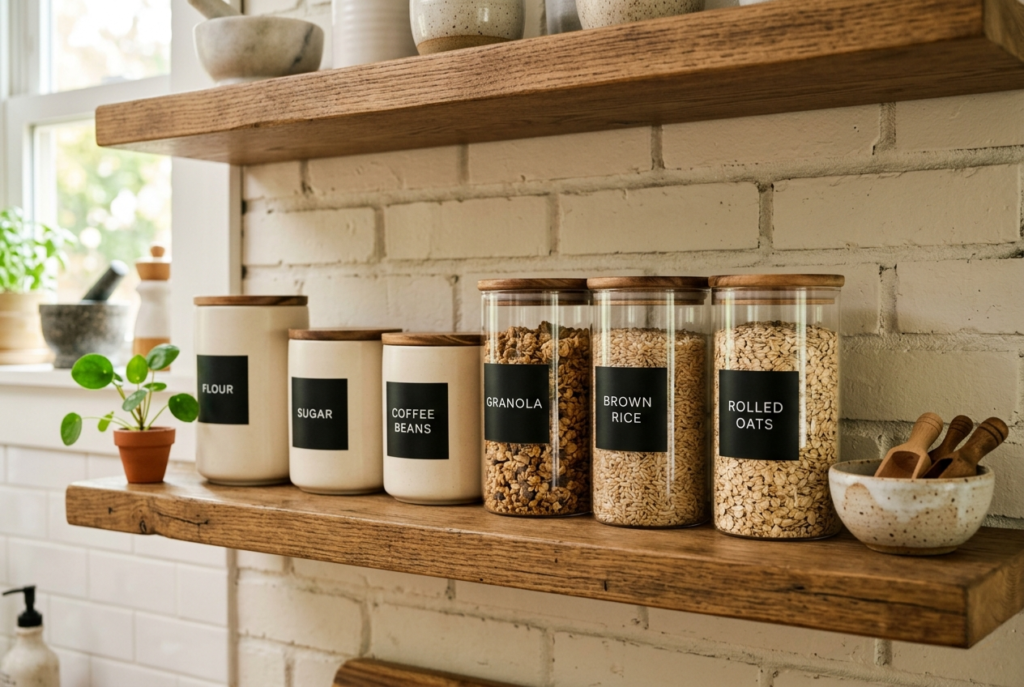
This might seem like a small detail, but the visual impact of a pantry or set of open shelves where everything is decanted into matching containers is significant and immediately noticeable. Mismatched packaging — cereal boxes, pasta bags, sauce jars with their labels still on — creates visual noise that makes a kitchen feel cluttered and disorganized even when it is technically tidy.
A set of matching glass or ceramic canisters for flour, sugar, rice, pasta, and coffee costs very little and transforms a counter or pantry shelf from functional to styled. Label them simply — a chalk label, a sticker label, or a small handwritten card — and the whole arrangement looks like something from a design magazine rather than a grocery store shelf.
This is also one of the most satisfying kitchen upgrades to do because the results are immediate and the ongoing benefit — knowing where everything is, being able to see quantities at a glance — continues every day.
Takeaway: Matching containers turn a functional pantry into a design feature and cost almost nothing to implement.
9. Add Plants And Fresh Herbs
Adding plants to a kitchen brings life, air quality improvement, and a natural warmth that no manufactured decor element can quite replicate. In a kitchen specifically, fresh herbs serve a dual purpose — they look beautiful on a windowsill or counter and they are genuinely useful for cooking, which makes them the most practical decorating addition available.
A row of small terracotta pots along a kitchen windowsill containing basil, rosemary, mint, and chives costs almost nothing to set up and looks immediately beautiful. The combination of green against a window, natural light filtering through the herbs, and the terracotta pots providing warm color creates a vignette that photographers and stylists specifically recreate for magazine shoots.
Beyond herbs, a single larger plant on the counter or on top of a refrigerator — a pothos, a small fiddle leaf fig, or a trailing string of pearls in a ceramic pot — adds a living element that makes the whole kitchen feel more human and more cared for.
Takeaway: Plants and fresh herbs are the cheapest living decor available and they make any kitchen feel more alive and inviting.
10. Upgrade Your Kitchen Textiles
Tea towels, oven mitts, and the mat in front of the sink are things most people use until they fall apart rather than treat as decor elements. But they are among the most visible items in any kitchen, and swapping generic versions for quality alternatives in a consistent color palette makes a surprisingly big difference to how the whole kitchen feels.
For 2026, kitchen textiles in warm linen, soft cotton, and natural fibres in earthy neutral tones are the strongest choice. Cream, warm white, sage green, terracotta, and soft clay all work beautifully and feel current without being trend-dependent. A set of matching linen tea towels hung from an oven handle. A quality cotton anti-fatigue mat in a consistent neutral in front of the sink. An oven mitt that matches or complements the towels.
These items cost very little individually but together they signal that the kitchen has been thought about rather than just used. That signal — the sense that someone made deliberate choices about every element — is exactly what makes a kitchen feel expensive.
Takeaway: Kitchen textiles are the most overlooked styling opportunity in any kitchen and one of the cheapest to upgrade.
11. Paint Your Cabinets Rather Than Replace Them
Full cabinet replacement is one of the most expensive kitchen renovations available. Painting existing cabinets is one of the best alternatives — done properly, the results are genuinely impressive and the cost is a fraction of new cabinetry.
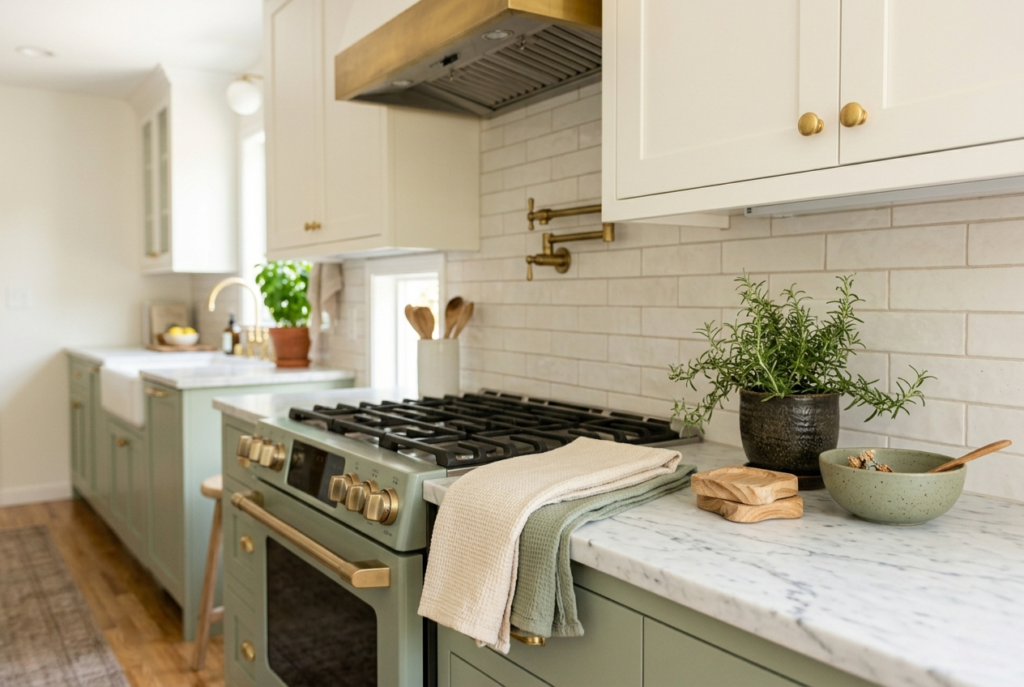
For maximum impact, the goal is to go richer and more intentional with color rather than defaulting to basic white. Moody neutrals, softened earth tones, or even a confident color can instantly make a kitchen feel custom and current. Navy blue lower cabinets with white uppers. Sage green throughout with brass hardware. Warm putty grey with matte black handles. These combinations look expensive because they look chosen rather than defaulted to.
The key to a good cabinet paint job is preparation — cleaning thoroughly, sanding lightly, using a good quality primer, and applying two or three thin coats of specialist cabinet paint rather than standard wall paint. It takes time and patience but the result, with new hardware to finish it off, can genuinely transform a kitchen from builder-grade to custom-looking without the builder-grade price tag.
Takeaway: Painted cabinets in the right color with the right hardware can make any kitchen look like a professional designed it.
12. Use A Consistent Color Palette For Everything
One of the most common reasons kitchens look cheap rather than expensive is not the quality of the individual elements — it is the lack of visual coherence between them. A red kettle, a purple knife block, a floral dish rack, and a novelty fruit bowl all doing their own thing in the same kitchen creates visual chaos that no amount of good quality individual items can overcome.
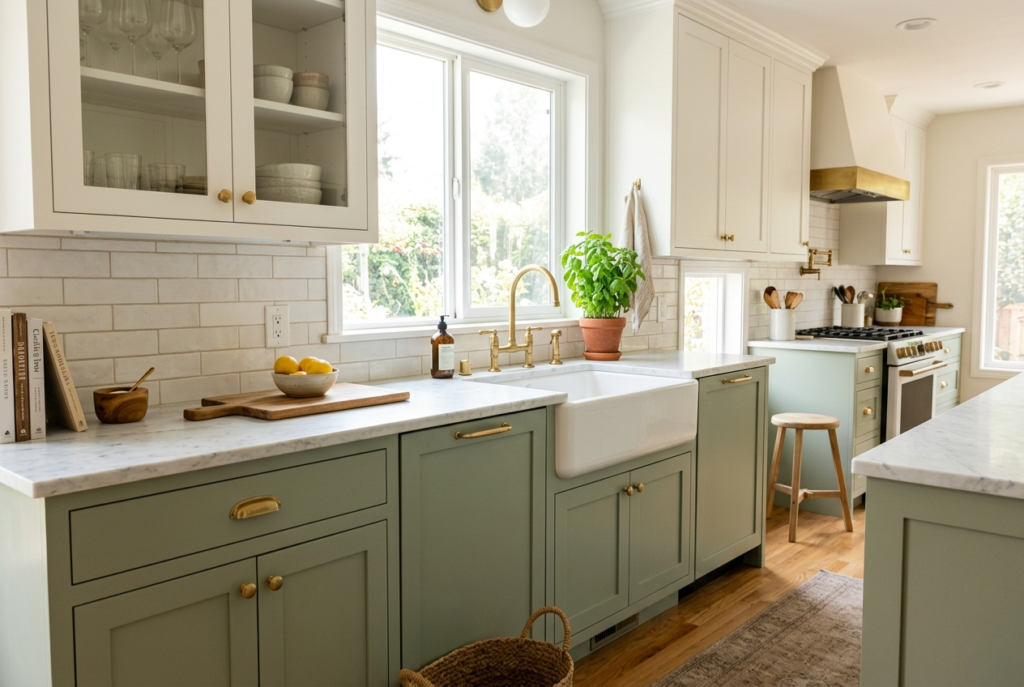
Neutral palettes like warm whites, soft taupes, and sage greens dominate 2026 kitchen design because they create cohesion and calm across all the elements of a kitchen rather than competing with each other. Choosing two or three tones and keeping all visible kitchen items within that palette — appliances, textiles, storage, accessories — immediately makes the space feel more unified and more intentional.
This does not mean everything has to match exactly. It means everything should feel like it belongs in the same family. Warm cream ceramics alongside natural wood alongside soft sage green linens feel cohesive. Bright red alongside chrome alongside floral patterns feel like three different kitchens arguing with each other.
Takeaway: A consistent color palette costs nothing but makes every individual item in your kitchen look more expensive.
13. Add A Statement Light Fixture
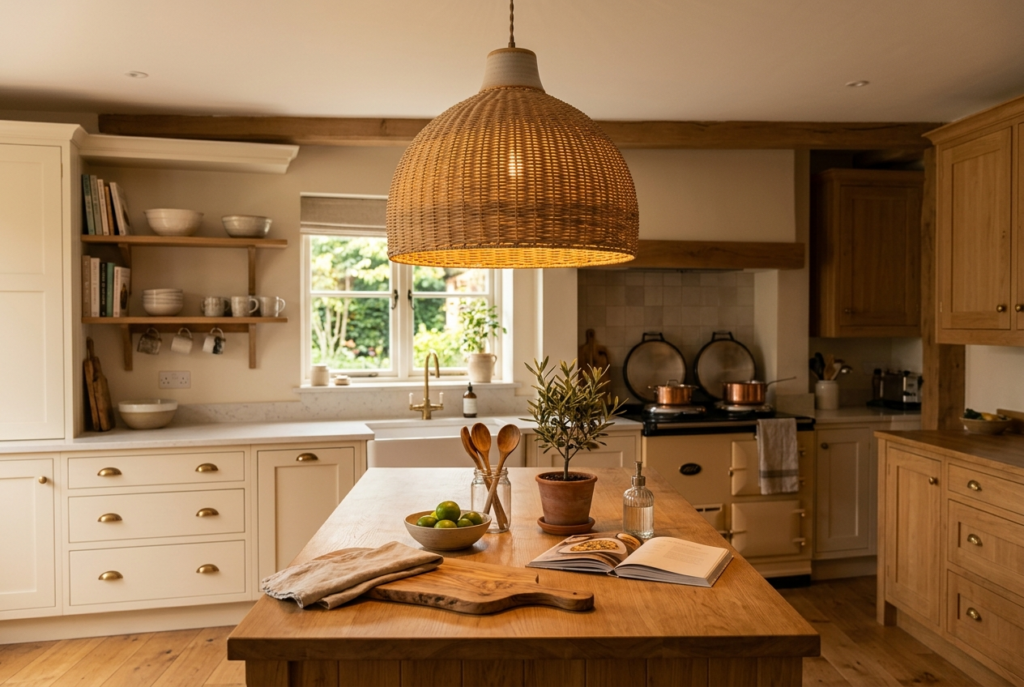
A single well-chosen light fixture can become the focal point of an entire kitchen and elevate everything around it. In kitchens with an island, a pair of pendant lights hung over it creates an immediate sense of design intention. In kitchens without an island, a single statement ceiling fixture — a rattan pendant, a cluster of glass globes, a sculptural metal shade — does the same job.
The fixture does not need to be expensive to be effective. Rattan and wicker pendant lights are widely available for very little and look beautiful in kitchen settings, particularly in 2026’s natural materials trend. Simple ceramic pendant lights in warm white or terracotta are similarly affordable and feel both current and timeless.
What matters is that the fixture feels like a choice — something you selected rather than something that came with the kitchen. Builder-grade drum shades and flush-mount ceiling lights are the fixtures that came with the kitchen. A pendant you chose because it fit the specific aesthetic you were going for is a design decision. That difference reads clearly to anyone who walks into the space.
Takeaway: One good light fixture turns a kitchen ceiling into a design feature rather than a functional afterthought.
14. Frame Your Window With Simple Curtains Or A Roman Blind
Bare kitchen windows are one of the most common missed opportunities in budget kitchen styling. A window with nothing on it looks unfinished — particularly in the evening when the dark glass just reflects the room back at you. A simple curtain panel or a clean Roman blind in a quality fabric changes the whole frame of the window and adds softness and texture to what is often a hard-surfaced room.
For kitchen windows specifically, linen or cotton Roman blinds in warm neutral tones are the most versatile and attractive option. They filter light beautifully during the day, provide privacy in the evening, and add a layer of softness that kitchens — with their tiles, hard counters, and appliances — often need. A cafe curtain on a simple rod covering only the lower half of the window is an even simpler and often more charming alternative, particularly in a more traditional or farmhouse-style kitchen.
The fabric and the hanging quality matter more than the specific style. A well-hung linen blind in a quality neutral fabric will always look more expensive than a cheap printed curtain panel however stylish its pattern.
Takeaway: A kitchen window treatment adds softness, privacy, and a finishing detail that makes the whole room feel more complete.
15. Create A Coffee Or Drink Station
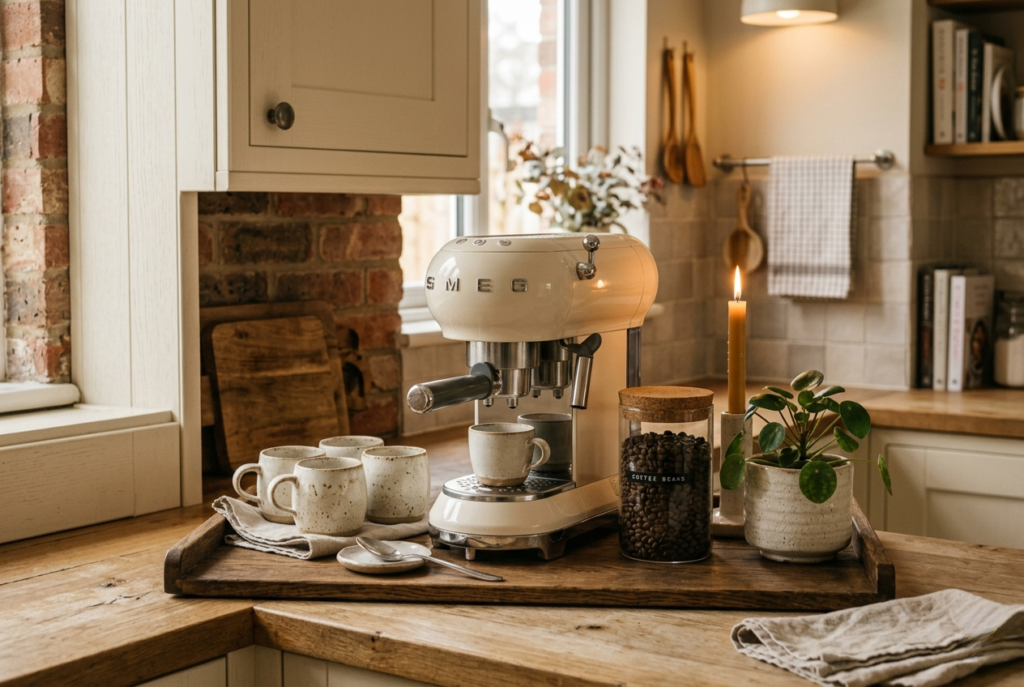
Designating a specific corner or section of counter as a dedicated coffee or drink station is one of those styling ideas that is simultaneously practical and beautiful — which is the best kind. It takes the items you already have (coffee machine, kettle, mugs, coffee, tea) and gives them a defined home that looks intentional rather than scattered.
The elements of a good coffee station are simple. A tray to define and contain the area. The coffee or tea making equipment in consistent finishes. Mugs or glasses grouped together — either on the tray, on a small shelf above, or on a mug tree beside it. A small plant or candle for atmosphere. A jar of coffee beans or a small tin of tea for visual interest.
This one designated, styled area creates an anchor point in the kitchen that the eye enjoys landing on — which makes the whole kitchen feel more considered than it might otherwise. It is also one of the few kitchen changes that becomes more enjoyable over time rather than something you stop noticing.
Get coffee table at your kitchen: https://amzn.to/4xxdM11
Takeaway: A styled coffee station turns a daily routine into a small daily pleasure and makes your kitchen feel more designed in the process.
16. Use Removable Wallpaper On One Wall Or Inside Cabinets
Removable peel-and-stick wallpaper has genuinely changed what is possible in kitchen decorating — particularly for renters who cannot make permanent changes. A single wallpapered wall behind open shelving or beside the refrigerator adds pattern, color, and personality to a kitchen without any of the commitment or cost of traditional wallpaper installation.
Removable wallpaper works particularly well as a backsplash alternative, adding color and pattern to a kitchen quickly and affordably. Beyond walls, lining the inside back panel of glass-fronted or open cabinets with wallpaper is a small detail that looks beautiful and costs very little — the back of a cabinet requires only a fraction of a roll.
For 2026 kitchens, the most successful wallpaper patterns are those that feel classic rather than trend-driven — a simple tile print, a subtle botanical repeat, a fine geometric in neutral tones. These choices feel intentional and considered rather than like a trend you’ll want to remove in two years.
Takeaway: Removable wallpaper gives a kitchen pattern and personality without permanent commitment — perfect for renters and commitment-shy decorators alike.
17. Rethink Your Kitchen Sink Area
The kitchen sink area is one of the most-used spots in the entire home and one of the most consistently neglected from a styling perspective. A wire dish rack, a bottle of washing up liquid in its original packaging, and a worn cloth by the sink is the default — and the default looks cheap regardless of what the rest of the kitchen looks like.
A simple pump dispenser for washing up liquid in a ceramic or stainless finish. A quality dish rack in matte black, brushed stainless, or warm timber that you are not embarrassed for guests to see. A small tray to contain both. A clean folded linen cloth rather than a worn fabric one. These four changes to the sink area cost almost nothing and elevate the most-seen corner of any kitchen.
A small plant on the windowsill above the sink — where it gets good light and benefits from the humidity — completes the transformation. The sink area goes from functional afterthought to a considered, styled corner that makes the kitchen feel looked after.
Takeaway: The sink area is the most-used spot in the kitchen and the least styled — fixing it costs very little and is immediately noticeable.
18. Edit Ruthlessly — Then Stop Adding
The final idea on this list is the most important and the most counterintuitive. The kitchens that look most expensive are not the ones with the most things in them. They are the ones with the fewest wrong things.
Every kitchen accumulates over time — gadgets that seemed useful, gifts that didn’t quite fit, sale items bought without a specific plan for them. The result is a kitchen that is full but never feels finished. The solution is editing: a deliberate, honest pass through the kitchen asking of every visible object whether it earns its place on the counter, shelf, or wall.
If it is not used weekly, it goes in a cupboard or out of the kitchen entirely. If it does not fit the color palette, it gets replaced with something that does. If it was never quite right and you have been meaning to replace it, now is the time. What remains after this process — the objects that are genuinely used, genuinely loved, or genuinely beautiful — will look remarkable against the cleared space around them.
The discipline to stop adding things after the edit is equally important. Every new item should earn its place before it enters the kitchen. That discipline, maintained over time, is what keeps a kitchen looking expensive rather than sliding back toward clutter.
Takeaway: The most expensive-looking kitchens are the result of ruthless editing, not expensive purchases.
Expert Perspective — The One Truth About Expensive-Looking Kitchens
Here is the insight that most kitchen decorating articles miss entirely.
An expensive-looking kitchen is not about any individual element. It is about the relationship between elements — the sense that every visible thing was chosen to work with everything else rather than independently of it.
This is why hardware matters so much. Not because brass pulls are inherently beautiful, but because consistent brass pulls create a thread of warmth and intentionality that runs through the whole kitchen and ties together cabinets, light fixtures, tap fittings, and accessories that might otherwise feel unrelated.
This is also why editing matters so much. Not because minimalism is a style rule, but because every object you remove makes the objects that remain look more deliberately placed.
The most expensive-looking kitchens are coherent. Everything speaks the same visual language. Achieving that coherence costs nothing. It just requires paying attention to the relationship between things rather than the quality of any single thing.
Frequently Asked Questions
Q: What is the cheapest way to make a kitchen look more expensive? Swap your cabinet hardware. A full set of handles and knobs in a consistent warm finish costs between $50 and $150 and delivers more visual impact than almost any other single purchase. Follow it up by editing your counters down to only the essentials and your kitchen will look transformed without anything else changing.
Q: Can I make my kitchen look expensive without painting the cabinets? Absolutely. New hardware, upgraded lighting, styled open shelving, consistent textiles, and a curated counter can completely transform how a kitchen looks without touching the cabinet color. Painting is one of the most impactful options but it is far from the only one.
Q: What colors make a kitchen look expensive in 2026? Warm cream and soft ivory tones are the strongest trend for 2026, replacing the stark whites that dominated previous years. Sage green, warm putty grey, and soft navy are also strong choices. The key is warmth — cool greys and bright whites tend to read as cheap rather than clean in kitchen settings.
Q: How do I make a small kitchen look more expensive? Clear the counters as much as possible. Add a mirror or reflective splashback to bounce light. Use lighting under the cabinets to illuminate the counter surface. Choose one statement element — a good light fixture, a beautiful blind — that draws the eye upward. And maintain a very tight, consistent color palette so the small space feels coherent rather than cluttered.
Q: Does open shelving make a kitchen look more expensive? Done well, yes — significantly. The key is that everything on open shelves needs to be either useful or beautiful, kept to a consistent color palette, and edited regularly. Open shelving that accumulates random objects looks worse than closed cabinets. Open shelving with curated, consistent items looks better than almost anything else you can do to a kitchen wall.
Conclusion
Making your kitchen look expensive on a budget is not about any single purchase. It is about a series of small, deliberate decisions that together create the impression of a space that was thought about rather than just filled up.
Start with hardware and lighting — those two changes alone will shift how the entire kitchen feels. Then work through the list one idea at a time, letting each change settle before adding the next.
The kitchen you want is already there. You are just removing the things that are hiding it.